OverView
Callab was designed around a simple observation: discovering opportunities in the music industry often depends more on visibility and connections than actual compatibility. Independent musicians usually rely on scattered social posts, cold outreach, group chats, or personal networks to find gigs, while event organizers and labels are overwhelmed with disconnected submissions coming from DMs, emails, and multiple platforms at once.
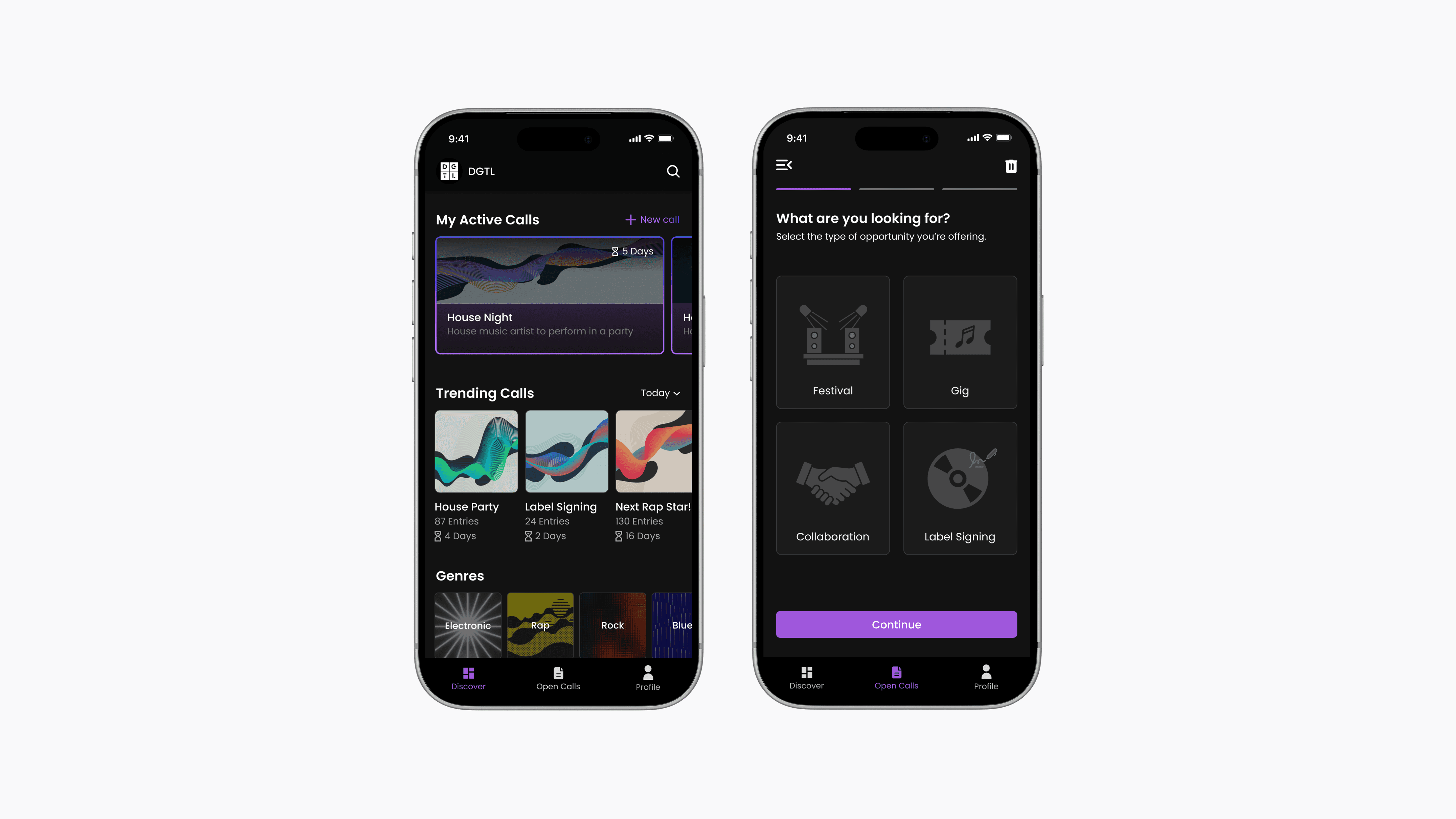
Instead of designing another feed-based platform focused on endless browsing and self-promotion, the product was built around structured open calls. Organizers define the type of artist they are looking for, event details, budget, and requirements, while musicians discover opportunities that are actually relevant to their role, genre, and experience.
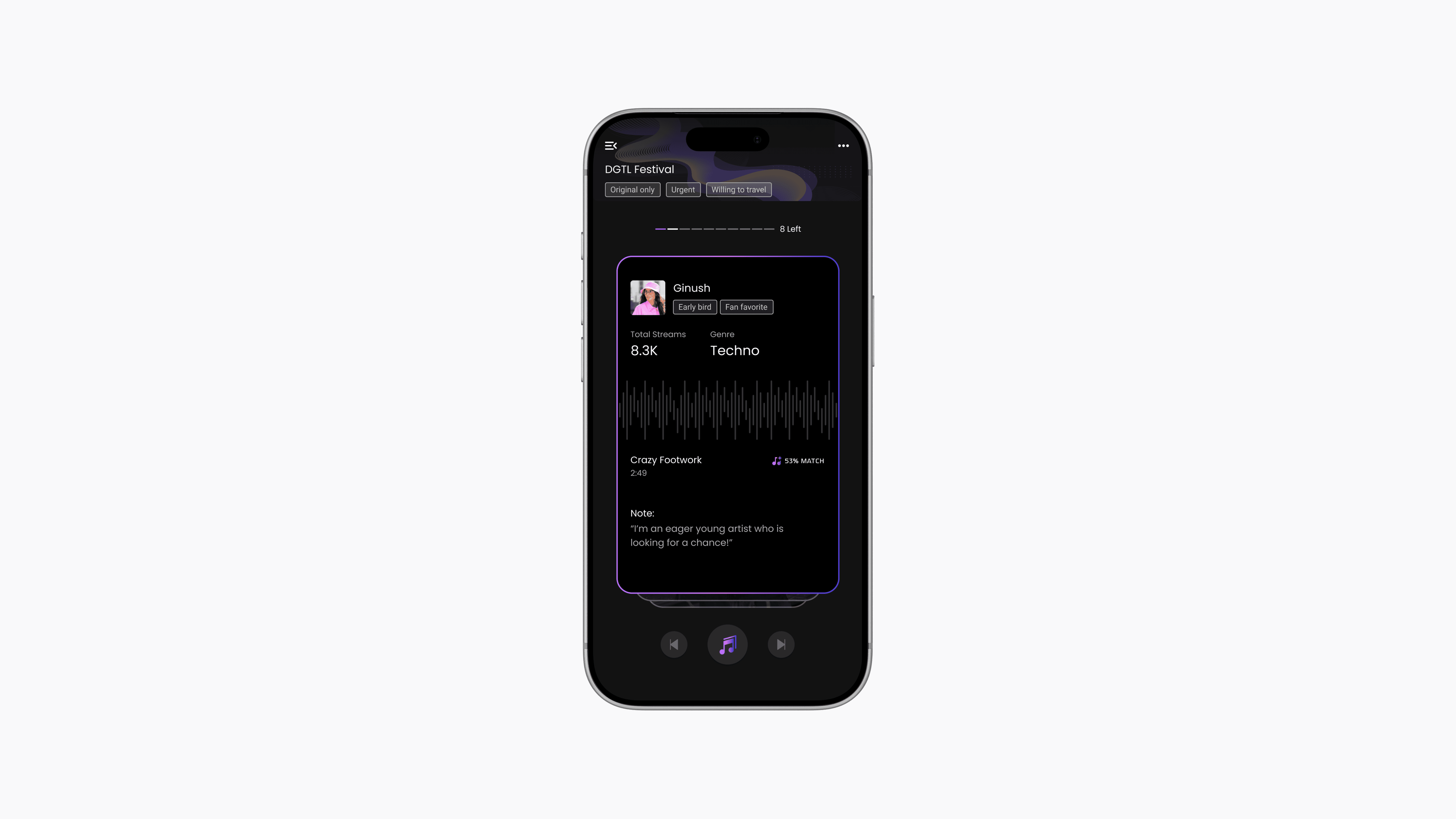
One of the core product decisions was shifting discovery from passive exposure to intentional matching. Rather than asking artists to constantly compete for attention, the platform creates focused moments of interaction where applications happen within a specific context. This structure also reduces noise for organizers by turning scattered submissions into manageable candidate flows instead of endless content streams.
Designing a Two-Sided Experience
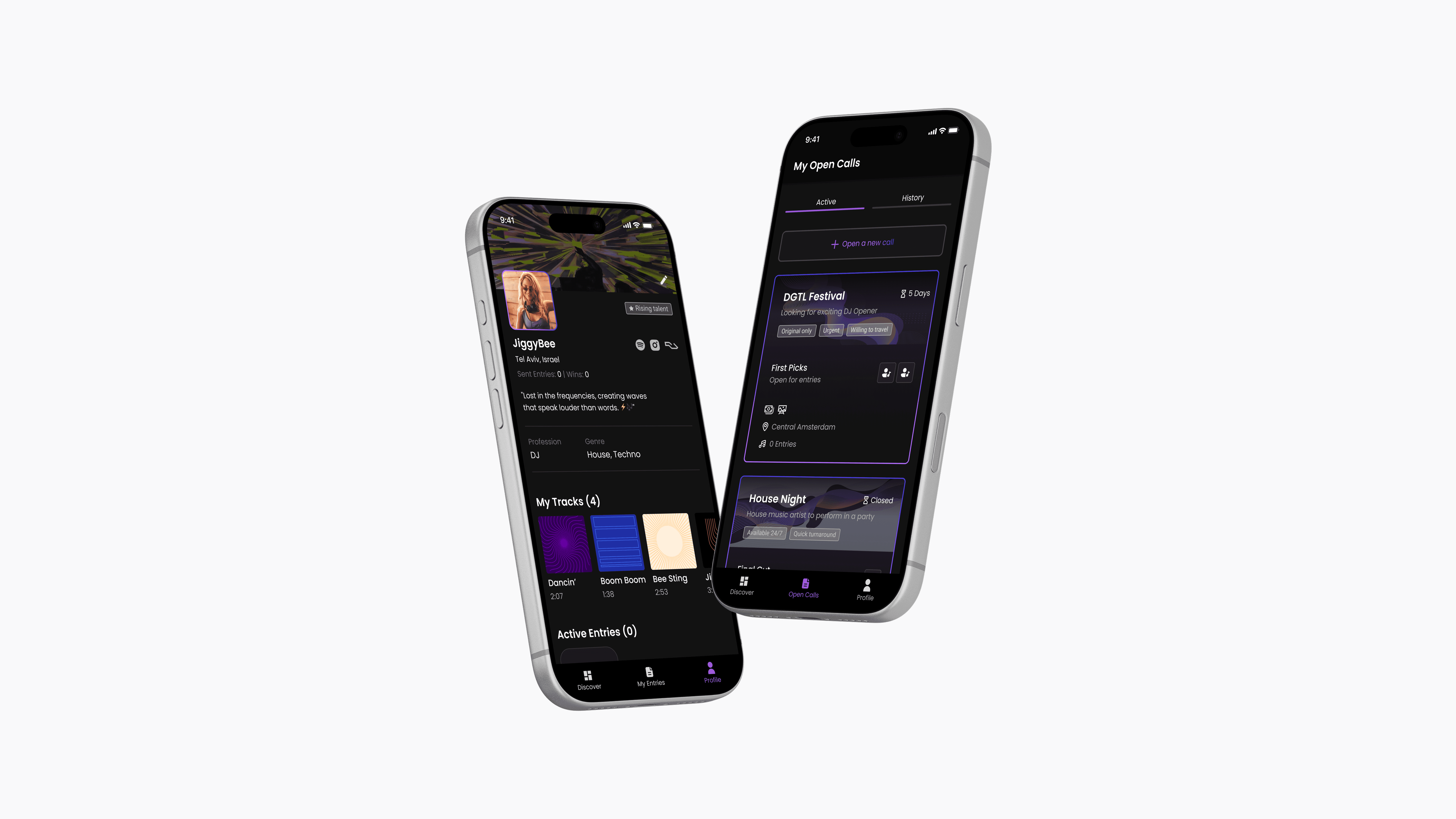
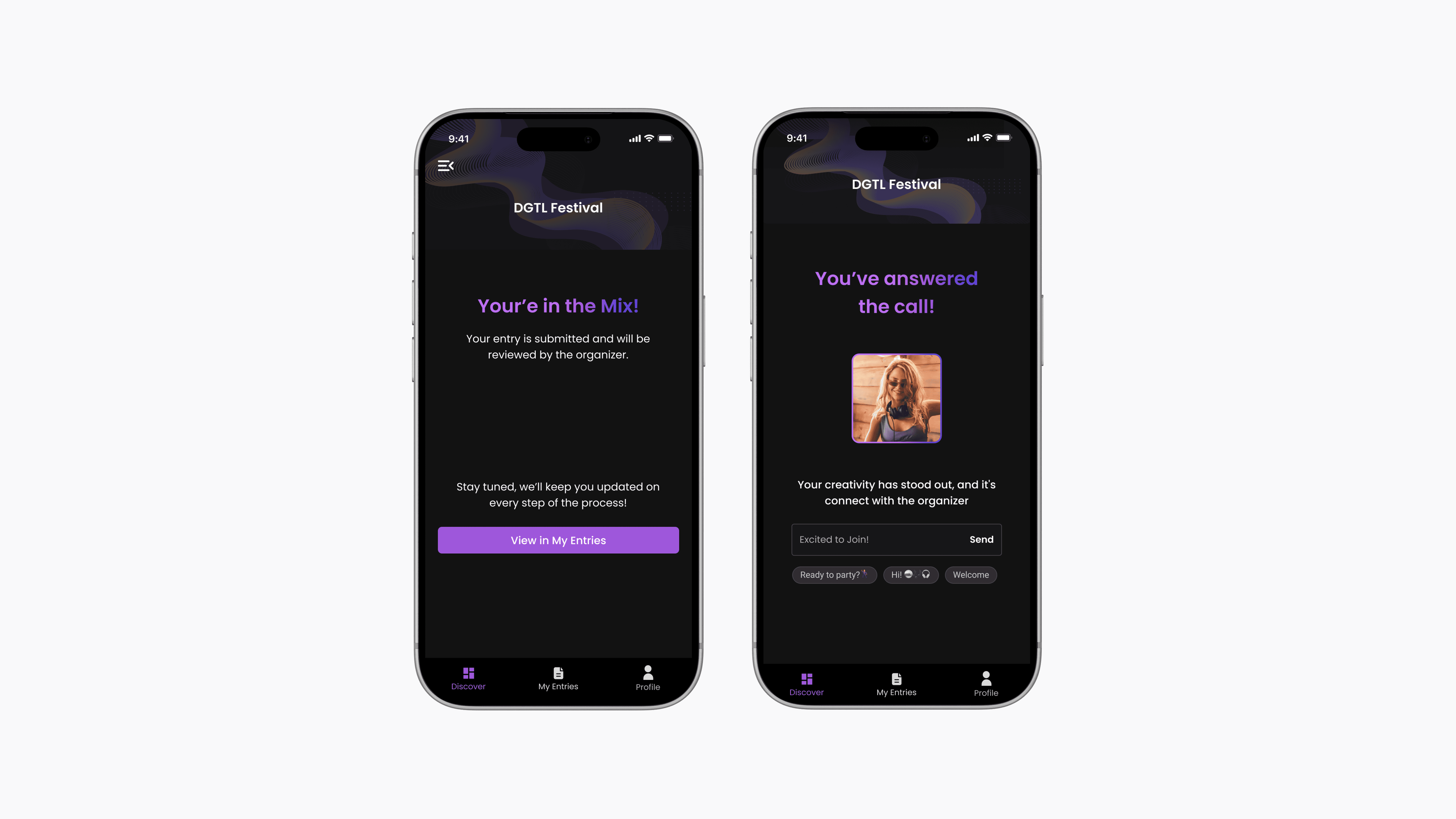
A large part of the project focused on designing the relationship between the musician experience and the organizer experience as one connected system rather than two separate products. Every state on one side directly affects the other, applications, reviews, shortlist states, notifications, and final decisions all become shared interaction moments between both users.
On the musician side, the experience was intentionally designed around guided self-presentation instead of social-media-style posting. Artists gradually build their profile through onboarding, genre selection, role definition, and music uploads, allowing the platform to connect them with more relevant opportunities over time. The application flow itself was designed to feel lightweight and focused, helping musicians quickly understand what organizers are looking for without unnecessary friction.
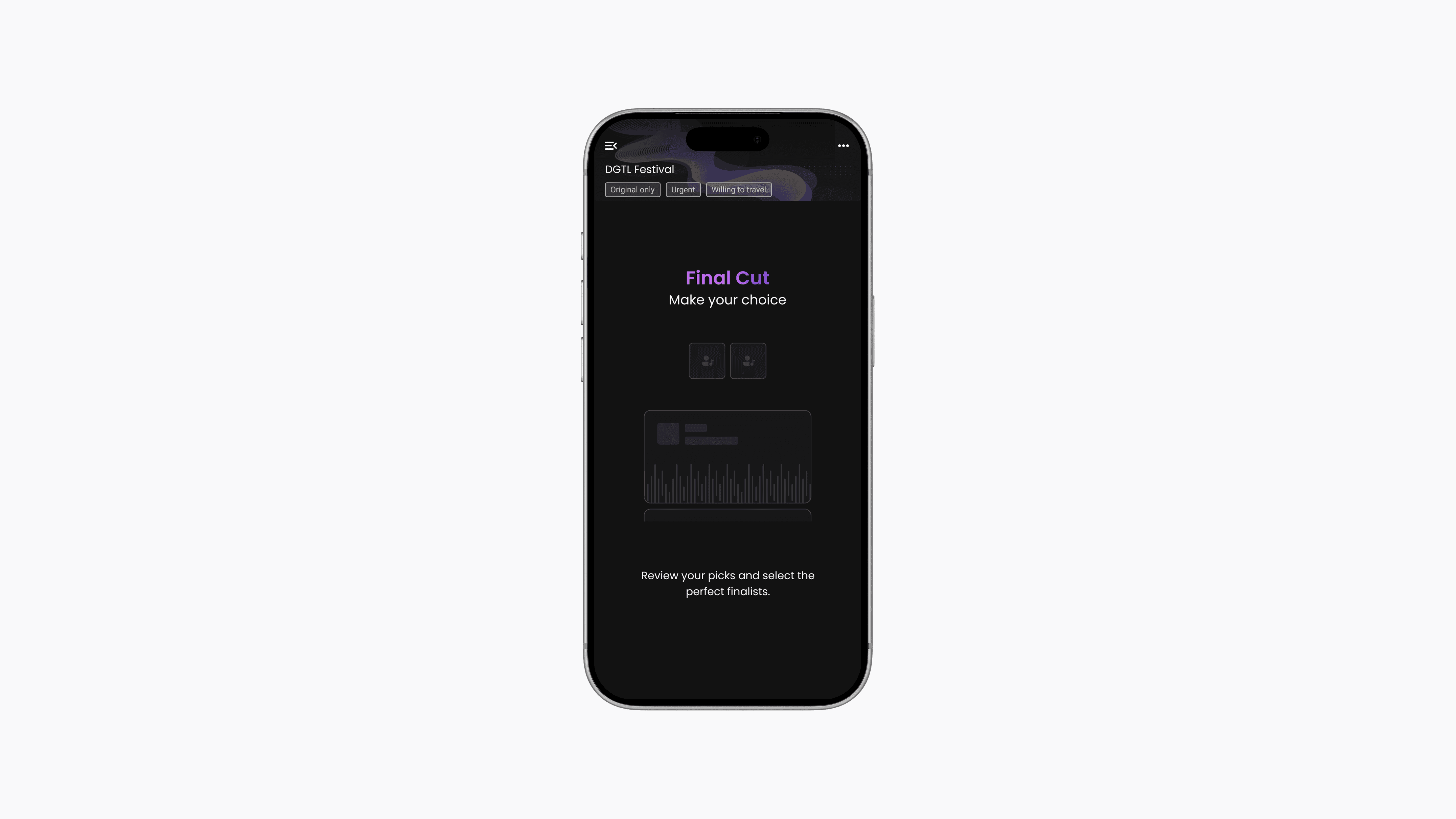
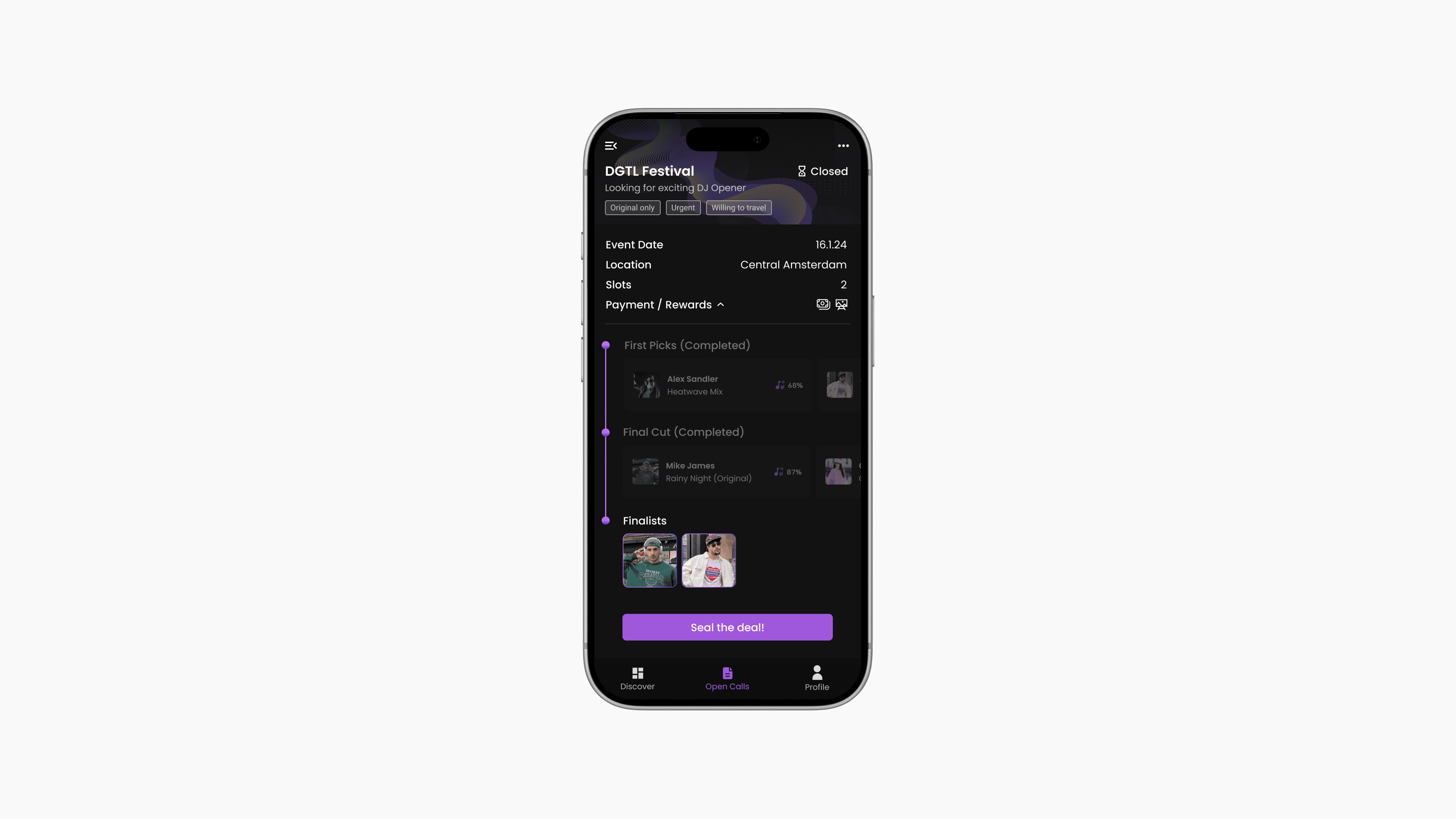
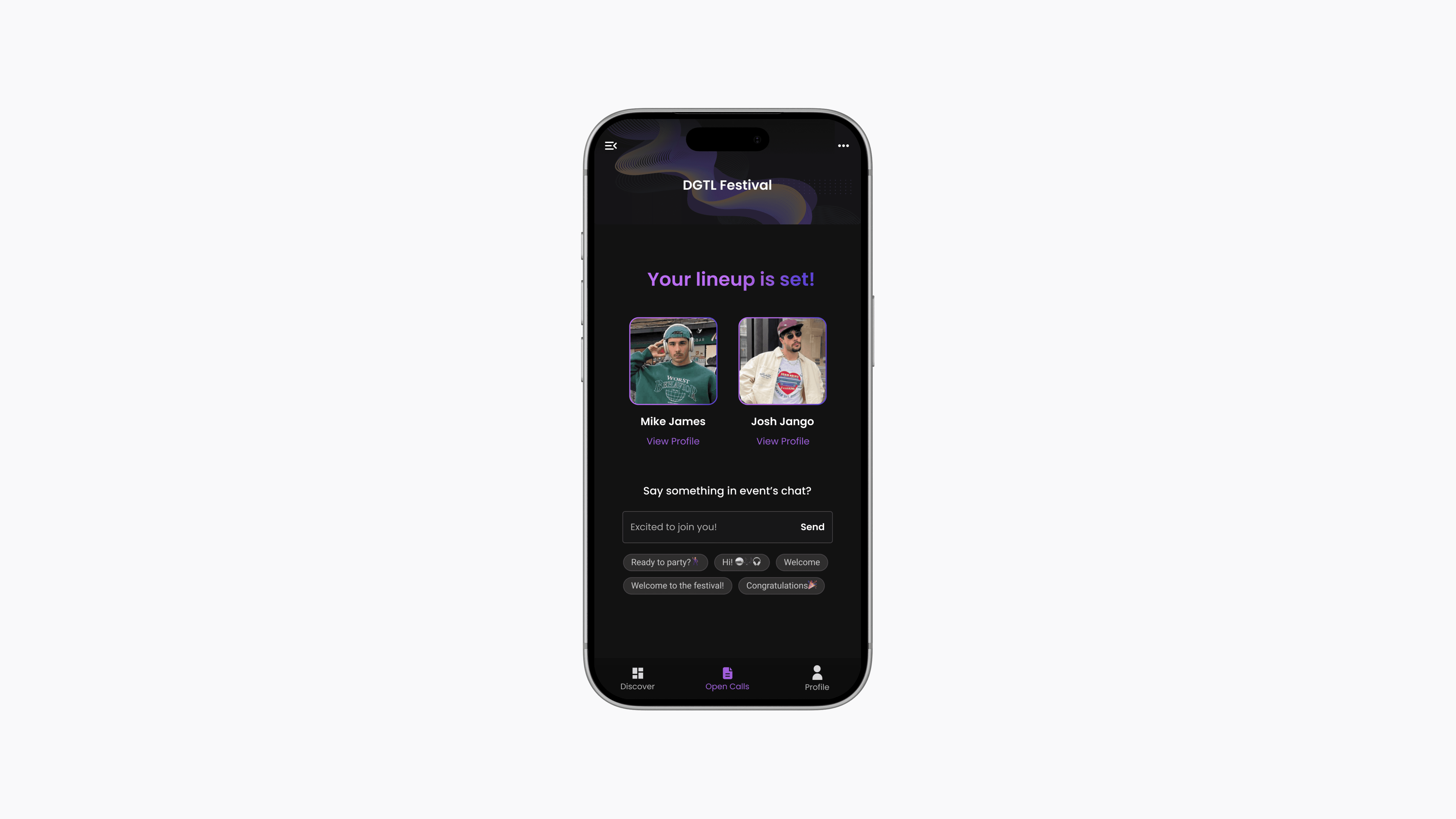
On the organizer side, the experience becomes more operational and decision-oriented. Rather than browsing endless musician listings, organizers review applicants inside structured pools tied to specific open calls. A major design decision was introducing shortlist and intermediate review states like “You’re in the mix,” reducing uncertainty for artists while also helping organizers manage large volumes of submissions more naturally. Instead of designing around instant acceptance or rejection, the system acknowledges that talent discovery is often gradual and iterative.
Beyond the Interface
The visual direction of the product was heavily influenced by nightlife culture, music platforms, and live-event environments. Dark surfaces, vibrant accent colors, gradients, and high-contrast typography were used to create an atmosphere that feels immersive and energetic while still maintaining clarity across more operational workflows.
Beyond the interface itself, this project became an exploration of structured discovery systems and multi-sided product behavior. One of the biggest challenges was balancing two very different mindsets inside the same platform, musicians looking for visibility and opportunity, and organizers looking for efficiency, relevance, and manageable decision-making.
Rather than focusing only on polished screens, the project was designed around interaction logic, emotional feedback states, and workflow continuity across both sides of the ecosystem. The final prototype includes connected flows for onboarding, music uploads, opportunity discovery, applications, candidate filtering, shortlist management, notifications, and final selection, creating a platform that explores a more intentional alternative to the chaotic discovery systems that currently dominate creative industries.